
Article · November 2026
What Should Students Be Able to Do After a Year of Robotics?
How to set clear learning outcomes for a robotics club or course and assess them through a final practical task.
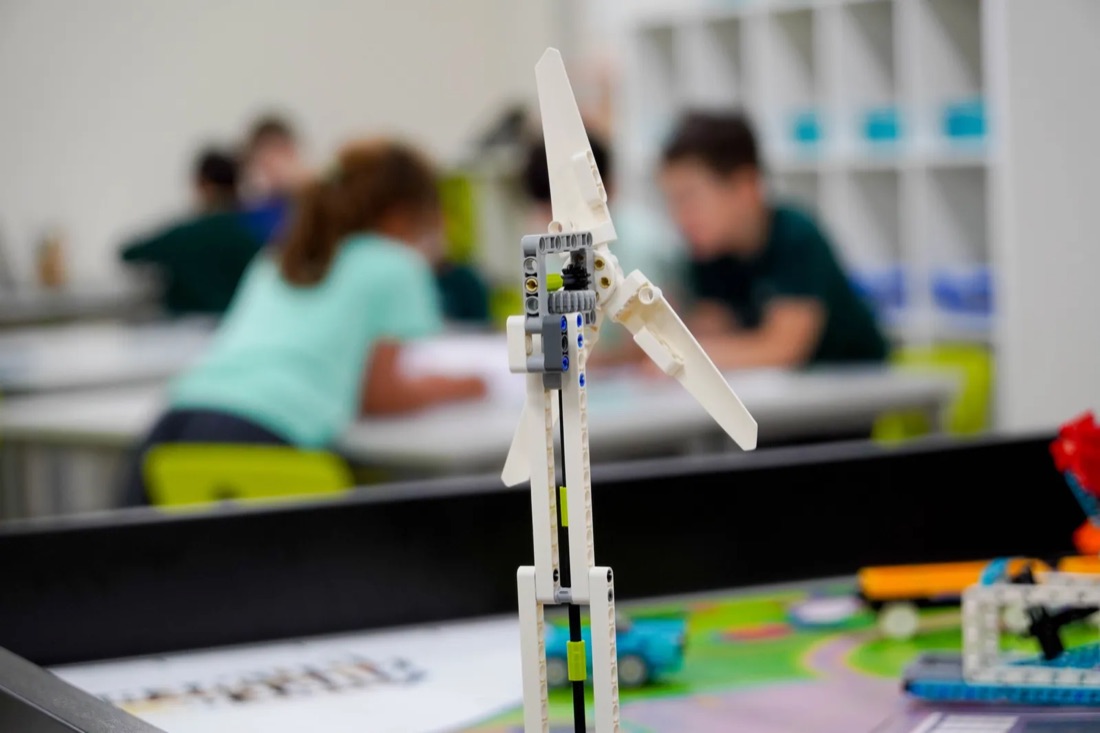
At the final exhibition the robot confidently completes the route. A neat presentation lies nearby. The team gets applause. To assess the learning outcome, the teacher still has to find out how the work was divided and whether each participant can explain the decision taken.
A small change is enough for this: move an obstacle, replace the load or ask the student to predict the program’s behaviour. Such a check shows what knowledge the student can apply independently.
After the first year it is important to see how a child sets a task, tests their solution and explains the result. The complexity of a model’s appearance is just one characteristic of a project.
Find out how much practice the group had
“A year of lessons” can mean very different amounts of teaching. For example, 34 sessions of 45 minutes make 25.5 clock hours. Two such lessons a week over the same 34 weeks give 51 hours. This is a hypothetical timetable example; real time must be calculated allowing for absences and cancellations.
Age matters too. An eight-year-old can explain how a mechanism works verbally and with a drawing. A teenager with enough preparation can compare several measurements and justify the choice of program parameters.
Below is a guideline for a beginner group of roughly 10–14-year-olds. It should be adapted to the curriculum, the children’s characteristics and the available equipment. It is a methodological framework for assessment, not a mandatory standard.
Six observable outcomes
| Skill | How it shows |
|---|---|
| Formulate a task | The student explains what the model must do and by what criterion success will be clear |
| Explain the construction | Shows how motion is transmitted, why the chosen element is needed and what will change if it is replaced |
| Create an algorithm | Uses the learned sequences, loops and conditions; can predict how their program will run |
| Apply a sensor | Explains what is measured and how the reading affects the model’s action |
| Test and improve a solution | Records the result of a run, proposes a cause of an error and tests the change |
| Present their work | Explains their personal contribution, a successful decision and a limitation of the project |
This framework is consistent with the approach to engineering design in NGSS: defining the criteria and constraints of a task, comparing solutions and using test data to improve the design. Here NGSS serves as an international methodological reference, not as a requirement of the Kazakhstan curriculum. Next Generation Science Standards
Test knowledge on a small project
Give the group a task that is familiar in terms of tools but new in its conditions. For example: build a model that carries a small load between two marked zones and stops before an obstacle.
Before starting, agree on the criteria: the load stays on the platform, the model reaches the required zone, the stop happens within a given range. Distances, load sizes and the method of detecting the obstacle are chosen to suit the set and the group’s level.
The team makes several runs and records what happened. The teacher may offer three attempts as a teaching format, explaining that this number is not enough for a serious conclusion about the device’s reliability.
After the first series students choose one change: reduce the speed, strengthen the mount or change the sensor trigger threshold. Then they repeat the test under comparable conditions.
The value of the work shows in the explanation: “In two runs the load shifted. We changed the mount and tested it again.” Such wording connects observation, decision and result. The teacher sees the line of thought and can ask the next question.
See what happens when something goes wrong
In independent work the following sequence is useful: describe the observation, propose a cause, choose a check and evaluate the result.
If the model turns the wrong way, the student first clarifies which motor is running and in which direction. If a sensor gives unexpected readings, they check its position and measurement conditions. The teacher helps with questions suited to the group’s level.
Full independence after the first year is not required. What matters more is whether the help becomes more targeted. At the start a child may need step-by-step support; by the end of the year, a hint about where to look for the cause.
To record progress it is convenient to use four descriptions:
- Performs from a model.
- Performs with guiding questions.
- Independently solves a familiar task.
- Transfers the method to a changed condition.
The level may differ for each skill. A student may be able to construct independently but still need help working with conditions in a program.
Separate the team result from individual understanding
One robot represents the work of the whole group, so the final project should be supplemented with a short individual check.
Ask each participant to explain a section of the program, predict the result of changing a parameter or propose a way to check an error. A few meaningful questions are often enough to determine the next learning step.
Rotate roles in advance during lessons. Keep short evidence of the work: a sketch, a fragment of a program, a table of tests, an oral explanation. Then assessment relies on the child’s activity throughout the course and takes their contribution to the shared project into account.
If students use AI the same principle holds: the child must understand the proposed solution, check it and be able to explain the change. Generated code alone does not confirm mastery of the topic.
Build a portfolio that shows progress
Three works are enough for a final meeting with parents or school leadership: a starting, an intermediate and a final one. In each it is useful to keep the task condition, the student’s solution, the test results and a short comment from the teacher.
This makes it visible what has changed: the child has started to choose the construction themselves, to apply a condition in a program meaningfully or to explain the cause of a failed run.
Assessment results help to plan the next year. One group will need more independent construction, another work with data, a third tasks with several acceptable solutions.
A convincing result of the first year is a student who can show their work, explain how it is built and propose a well-founded improvement. It is exactly this result that creates the foundation for further engineering education.